A Body Is Not a Problem to Solve

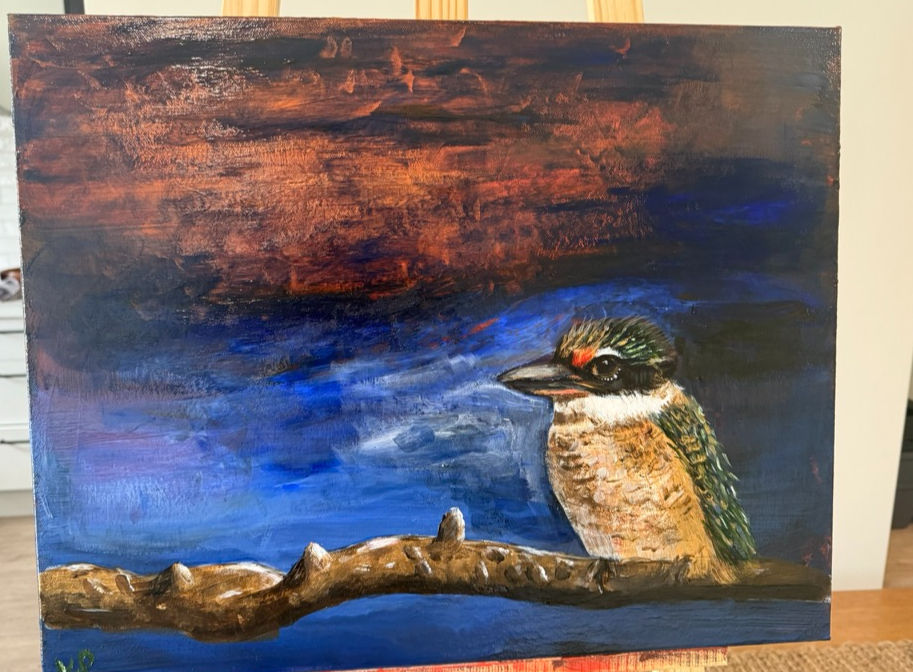
Rethinking self-improvement, body trust, and what it means to care for ourselves
There is something quietly unsettling about the way many of us learn to relate to our bodies.
From a young age, we are taught—directly and indirectly—that our bodies are projects. Something to manage, improve, optimise, discipline, or fix.
Hunger becomes suspicious.
Rest feels indulgent.
Change is framed as failure.
And self-improvement is often reduced to how well we can control how we look.
All the while, these same bodies are carrying us through life.
They heal injuries. They adapt to stress. They keep functioning through illness, grief, long days, short nights, work, parenting, heartbreak, and joy. They carry us through mountains and ordinary Tuesdays alike. They respond intelligently to what they are given—even when what they are given is very little.
And yet, instead of asking how to support our bodies, we are taught to scrutinise them. To override their signals. To distrust their needs. To treat them as obstacles rather than allies.
This tension—relying on our bodies while resenting them—sits at the heart of so much suffering.
And it raises an important question:
What if the body was never the problem to solve?
How Body Hatred Became Normal
Body dissatisfaction has become so woven into everyday life that it often goes unquestioned. Disliking your body is treated as responsible, even virtuous. It is framed as motivation, discipline, or “just part of being healthy.”
We don’t shame our lungs for needing oxygen.We don’t punish our hearts for beating faster under stress.We don’t criticise our skin for ageing while doing exactly what skin is designed to do.
Yet we routinely criticise bodies for responding appropriately to hunger, stress, hormones, injury, illness, and life itself.
Diet culture has normalised the idea that the body must earn care by behaving “correctly.” That nourishment must be justified. That rest must be deserved. That worth is conditional.
A body that is constantly monitored, controlled, and judged is far easier to mould—and far easier to profit from—than a body that is trusted.
Why Letting Go of Control Feels So Hard
If changing our relationship with our bodies were simply a matter of insight, most people would have done it already. But body control is not just an idea—it is a learned safety strategy.
Years of dieting, food rules, praise for weight loss, fear of weight gain, and moral language around eating train the brain to associate control with protection.
Hunger feels dangerous.
Fullness feels risky.
Change feels threatening.
This isn’t vanity. It’s neurobiology.
At some point, control genuinely did feel like it kept things together. Letting go now can feel like stepping into danger, even when the control itself is causing harm.
Rewiring that relationship takes time, repetition, and safety—not force.
Body Acceptance, Not Body Positivity
For many people, the idea of loving their body feels unrealistic.
Body positivity can quietly become another standard to fail at.
Body acceptance is different.
Acceptance means:
recognising the body as a living system, not an object
offering care without requiring approval
allowing neutrality, frustration, and gratitude to coexist
You do not have to like your body every day to treat it with respect. You do not have to feel confident to nourish yourself. You do not have to feel grateful to be deserving of care.
Acceptance creates space to be human.
Emotions Are Not Problems to Eliminate
Diet culture doesn’t only teach us to control bodies—it teaches us to control feelings.
Hunger, sadness, anger, joy, desire. We are encouraged to override them, suppress them, or manage them away. Food rules often double as emotional rules.
But emotions are not mistakes.
They are information.
I often think of emotions like waves in the ocean. Sometimes the water is calm. Sometimes it is rough. No wave is ever exactly the same. Its colour, strength, and clarity are shaped by what has come before—sleep, stress, nourishment, connection, loss.
You don’t control the ocean by fighting it. You learn how to float.
Learning to observe emotions—rather than suppress or obey them—is a vital part of repairing trust with both body and mind.
When Self-Improvement Isn’t About Fixing the Body
If self-improvement isn’t about shrinking, perfecting, or controlling the body, what is it?
In my work, and in my own life, real self-improvement is far quieter than diet culture promises. It is less visible, less dramatic, and far more sustainable.
For me, it looks like painting.
Not to be good. Not to be impressive. But to practice seeing. To slow my brain enough to notice light, shadow, texture, and proportion. To tolerate getting it wrong. To stay with frustration without self-criticism. That process strengthens the brain in ways no mirror ever could.
It looks like strengthening the body and brain neurologically—not aesthetically. Building balance, coordination, resilience, and trust. Teaching the nervous system that effort does not have to equal punishment.
It looks like setting small, achievable tasks and allowing them to take the time they take. Not rushing outcomes. Not demanding constant progress.
This kind of self-improvement asks different questions:
What skills am I building?
What helps my nervous system feel safer?
What allows me to stay present rather than controlling?
What supports my capacity to live, not just perform?
Growth Without Violence Toward the Self
Diet culture frames growth as a battle: discipline, willpower, pushing through.
But growth does not require aggression.
You don’t strengthen a nervous system by threatening it.You don’t build trust by overriding signals.You don’t develop confidence by proving your body is acceptable.
Real growth happens through repetition, safety, and patience. Through nourishment—physical, emotional, relational. Through showing up imperfectly and allowing learning curves.
This is the kind of change that actually rewires the brain.
Patience Is a Skill
One of the hardest things to unlearn after diet culture is the expectation of speed. Diets promise rapid transformation. Bodies are expected to comply immediately.
Brains do not work that way.Healing does not work that way.Skills do not work that way.
Patience is not passive. It is an active decision to keep going without immediate reward. To trust that small, repetitive actions are doing something meaningful beneath the surface.
They are.
A Life That Is Bigger Than Appearance
When self-improvement is no longer centred on body image, life expands.
Progress begins to look like:
clearer thinking
steadier moods
greater flexibility
increased tolerance for discomfort
deeper connection
greater capacity for life
These are changes you feel, not changes you need to display.
Your body will change. Your needs will change. Your emotions will move like waves.
That is not failure. That is being alive.
You do not need to perfect your body to be worthy of care. You do not need to control yourself into health. You do not need to hate your body to improve your life.
Learning to live with your body—rather than against it—may be the most meaningful self-improvement you ever make.
Author’s noteI see these patterns every week in my clinical work—across ages, diagnoses, and life stages. Capable people doing extraordinary things while believing their bodies are the problem. This piece is written to gently question that belief. If you recognise yourself here, you’re not failing. You’re responding to a culture that taught you to distrust something that was never broken.


Comments